
! Без рубрики
Why USDT Exchange Fees Depend on the Blockchain Network
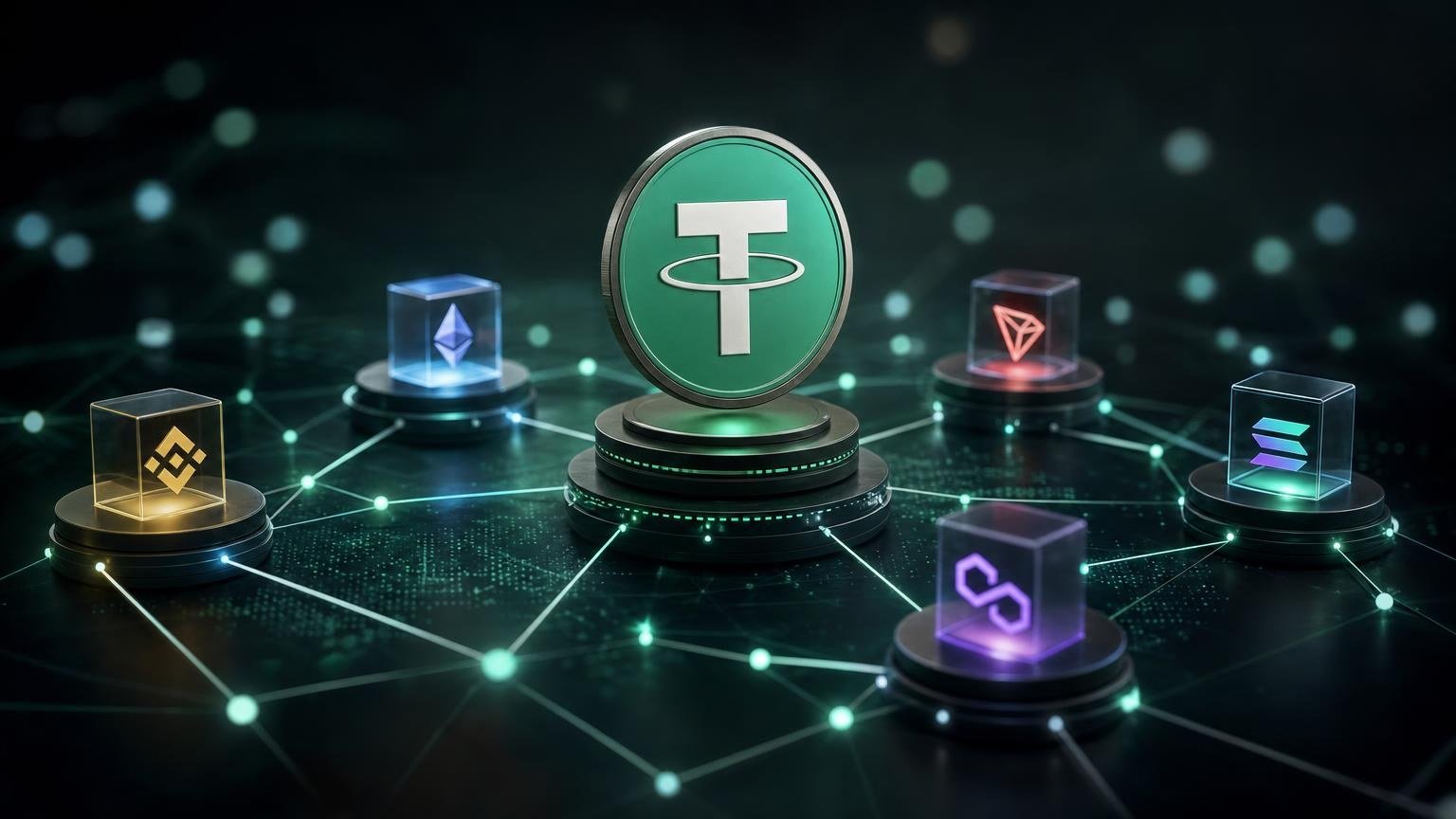
The same amount of USDT can cost differently to exchange because USDT exists on multiple blockchains, and each network has its own fee model, level of demand, technical requirements, and settlement process. The exchange service must also account for the cost of sending funds through the selected network. That is why choosing a network changes the quote even when the asset and exchange amount remain the same.
Topic map: USDT on different networks → blockchain fee mechanism → exchange quote → destination compatibility → transaction checks. These five nodes explain most fee differences without confusing the network charge with the exchange service’s own pricing.
Route 1 — Understand it quickly: read “One ticker, several networks,” then “What the quoted fee may contain.” The result: you will know why two USDT routes can produce different final amounts.
Route 2 — Prepare for a transaction: continue with “Compatibility comes before price,” the conditional example, and the pre-transfer checklist. The result: you will be able to compare available routes without selecting a network solely because its displayed fee is lower.
Route 3 — Explore the technical layer: start with the fee mechanism, open the technical notes, and finish with transaction verification. The result: you will understand gas, native network assets, smart-contract execution, and why fees can change between the quote and the next transaction.
One Ticker, Several Networks
USDT is the asset name, but the network determines how a particular token transfer is recorded. A USDT token on Ethereum does not travel through TRON, BNB Smart Chain, or another blockchain merely because all versions share the USDT ticker. Each implementation uses the transaction system of its own blockchain. Tether itself advises users to confirm the correct transport protocol when sending tokens and notes that support for particular blockchains can change. [1]
This creates the first link in the knowledge map: asset identity → network implementation. The asset may represent the same unit of account, but the transfer infrastructure is different. Consequently, validators or other network participants process the operation under different rules and charge fees in different ways.
The network selected in an exchange request must therefore match the network accepted by the receiving wallet or platform. Similar-looking labels do not make networks interchangeable. A destination may support USDT while refusing deposits through the particular network you selected.
How the Network Changes the Cost
The core mechanism is straightforward: network design → resource cost → payout expense. An exchange service preparing to send USDT has to create an on-chain transaction. The cost of that transaction depends on the chosen blockchain’s current rules and conditions.
Gas-based networks
On Ethereum, gas measures the computational work required to process an operation. The final gas charge depends on the amount of gas used and the price per unit, including protocol-defined and priority components. Network demand can affect the price, while an ERC-20 token transfer is a state-changing smart-contract operation rather than a simple movement of native ETH. [2]
Fees on Ethereum are normally paid in ETH, not in USDT. Other networks may likewise require their own native asset for transaction charges. A wallet can therefore hold enough USDT for the transfer yet still be unable to send it directly because it lacks the native asset needed for gas. An exchange may handle that infrastructure internally, but its quote can reflect the resulting expense.
Resource-based networks
TRON uses Bandwidth for transaction data and Energy for smart-contract execution. Those resources may be obtained through the network’s resource system; when available resources are insufficient, TRX can be burned under current chain parameters. The applicable parameters are dynamic and must be queried rather than treated as permanent fixed values. [3]
This illustrates why a route that is inexpensive at one moment is not guaranteed to remain the cheapest. The sender’s resource position, network parameters, congestion, and the type of operation can all affect the underlying cost.
Technical note: why token transfers may cost more than native-coin transfers
A native-coin transfer can use the blockchain’s basic transaction logic. A token transfer usually calls a smart contract and changes the contract’s recorded balances. On Ethereum-compatible systems, state-changing contract operations consume gas, and more computational work generally requires more gas units. [4]
This distinction does not produce a universal price difference. Gas prices, contract design, protocol rules, batching, and the sender’s infrastructure also matter. The current quote and network estimator remain more useful than an old fee comparison.
What the Quoted Exchange Fee May Contain
The blockchain charge is only one possible component of an exchange quote. Depending on the service and direction, the displayed result may reflect the market rate, the service’s pricing, liquidity and operational costs, and the expense of delivering funds through the selected network.
These components should not be treated as interchangeable:
- Network fee: the cost associated with recording or executing the payout transaction on the blockchain.
- Exchange pricing: the rate and service conditions applied to converting one asset into another.
- Amount received: the quantity expected at the destination after the terms shown for the request are applied.
- Dynamic adjustment: a possible update when rates or network conditions change, subject to the terms presented before confirmation.
A low network cost does not automatically mean the best total exchange result. Conversely, a route with a higher blockchain expense could still have a competitive final quote. Compare the amount expected at the receiving address and the applicable conditions, not one isolated fee label.
If the interface does not clearly separate these elements, inspect the request summary before sending funds. Do not assume that every difference between two quotes is caused exclusively by validators or gas.
Compatibility Comes Before Price
The cheapest listed network is unusable if the recipient does not accept it. This is the main practical limitation connecting the fee question to transaction safety: lower cost → network choice → destination support → address verification.
Before creating an exchange request, confirm all of the following:
- The sending service currently offers the required USDT network for that direction.
- The receiving wallet or platform supports deposits through exactly the same network.
- The destination address belongs to that network and was copied from the correct deposit screen.
- Any required memo, tag, or other destination identifier is included.
- The expected amount satisfies the recipient’s current deposit requirements.
Do not rely on address appearance alone. Some networks use visually similar address formats, and compatibility cannot always be established by looking at the first characters. Use the explicit network name shown by both sides.
A wrong network, incorrect address, or missing destination identifier may lead to delayed crediting or permanent loss. Blockchain transfers are generally not reversed like card payments. Recovery, if technically possible, depends on the recipient and may involve separate rules or charges.
A Conditional Example Without Invented Prices
Suppose a recipient accepts USDT through Network A and Network B, and the exchange service currently offers both routes. Network A has a higher underlying transaction expense at the time of the quote, so its expected payout is slightly lower. Network B shows a better final amount.
Network B is the practical choice only after confirming that the recipient accepts USDT on Network B and that the displayed address was generated for it. If the recipient accepts only Network A, the cheaper route is not a valid alternative. Selecting it would exchange a visible fee saving for a much larger transfer risk.
The example remains conditional because real fees, exchange rates, limits, network availability, and processing requirements change. They must be checked at the moment the request is created.
Why the Transfer Amount Usually Does Not Tell the Whole Story
A blockchain fee is often determined by transaction data and computational work rather than by applying a simple percentage to the number of USDT sent. On Ethereum, for example, the fee calculation uses gas consumed and the price per gas unit. [2]
As a result, sending a larger token amount does not necessarily multiply the underlying network fee by the same factor. The exchange service may still use minimum amounts, tiered conditions, or other pricing rules, but those are service-specific and should not be inferred from the blockchain mechanism.
This difference matters when comparing small exchanges. A mostly fixed on-chain payout expense can represent a larger share of a small transaction than of a larger one. That observation does not establish any particular service fee or minimum; the current request screen is the source to check.
How to Check a Route Before Sending USDT
Use a two-stage check: verify the exchange terms first, then verify the blockchain transaction.
Before creating the request
- Compare the final amount expected, not only a headline commission.
- Check the exact USDT network on both the sending and receiving sides.
- Review the current rate, minimum and maximum amounts, fee presentation, and any time-sensitive quote conditions.
- Confirm whether the direction is currently available rather than assuming that every asset, pair, or network is supported.
- Read the applicable verification requirements. They can depend on the transaction direction and the outcome of compliance checks.
Before transferring funds
- Open the official interface directly and avoid links from unsolicited messages or advertisements.
- Compare the full address carefully; clipboard-replacing malware can substitute another address.
- Recheck the network after copying the address.
- Confirm any memo or tag requirement.
- Review the amount and terms one final time before authorising an irreversible transaction.
After the transaction is sent
Use the transaction hash in the appropriate blockchain explorer. Check the network, token contract where relevant, sender, recipient, token amount, transaction status, and block confirmations. A successful blockchain status proves that the network processed the transaction; it does not necessarily mean that a custodial platform has already credited the deposit under its internal rules.
Technical note: what an explorer can and cannot verify
An explorer can display publicly recorded transaction data for its blockchain. It can help detect an incorrect destination, failed contract execution, or a transaction sent on a different network. It cannot reverse the transfer, determine whether you control the receiving account, or override a platform’s compliance and deposit-crediting procedures.
Practical Application: Choosing an Available USDT Route
When using the exchange service, start by checking which USDT directions and networks are currently offered for the intended operation. Support for an asset does not imply that every pair, blockchain, or direction is available. The service supports USDT alongside several other crypto assets and is gradually adding assets, but current availability must be confirmed before creating a request.
Open the request form to check the currently available USDT exchange directions, enter the relevant assets and amount, and compare the network label, expected payout, and stated conditions. Verification requirements may vary by direction and by the results of compliance checks, so review them before transferring funds.
Finally, remember that network cost is only one decision factor. The safe sequence is consistent: identify the recipient’s supported network, find a matching available exchange route, compare the complete quote, verify the address and network, and only then send. Exchange rates and crypto-asset values can move, regulations differ across countries, and no fee saving compensates for transferring USDT through an incompatible network.
