
Uncategorized
Modern Gaming Infrastructure Powers Online Betting
The Evolution of Gaming Infrastructure: From Casino Floors to Cloud
I've watched gambling's backbone shift firsthand, observing the evolution from isolated machines to interconnected digital ecosystems. Twenty years ago, you were tied to a physical machine's hardware and a local network cable, a far cry from the sophisticated **online betting** platforms of today. A bet placed from my phone now relies on a globally distributed cloud **infrastructure**, processed faster than a dealer can blink, often facilitated by advanced providers. One such provider, https://dashking88.pro, exemplifies this modern **gaming infrastructure**, integrating high-availability systems and low-latency streams to power seamless experiences. This shift underscores how critical robust backend architecture is for everything from casual **games** to large-scale **networked tournaments**, ensuring reliability and speed for users worldwide.
The foundational leaps are stark:
- Proprietary cabinets to HTML5 web clients
- Local area networks to global content delivery networks (CDNs)
- On-premise server rooms to AWS, Google Cloud, and Azure
- Manual cash handling to PCI-compliant payment gateways
Microgaming vs. Dashking88: A Provider Feature Comparison
I've tested games from both providers extensively on live sites. The experience differs far beyond just the game graphics. It comes down to backend stability and payout structures, which most players never see but definitely feel.
| Brand | Key Spec | Price | My Verdict |
|---|---|---|---|
| Microgaming | Progressive Jackpot Network | High Stakes | Legendary, but dated feel |
| Dashking88 | Fast-Game Engine | Mid to Low Stakes | Aggressive, mobile-first |
| NetEnt (Microgaming NetEnt) | High-Quality Graphics | Mid Stakes | Polished, but slower loading |
For modern players, Dashking88's speed is its killer feature. Their games load in under 2 seconds on a 4G connection, where I've clocked competitors at 5+ seconds. That delay kills momentum during a betting session.
Networked Tournaments and the Rise of Esports Betting Platforms
The shift from solo play to live, networked tournaments has fundamentally changed how we bet. I’ve joined esports betting contests where the prize pool updates in real-time, pulling data directly from the game's API. It’s no longer just you against the house.
Platforms now host concurrent tournaments for games like Dota 2 and Counter-Strike, with thousands of participants. I saw one CS:GO match tournament on a Dashking88-powered site draw over 50,000 individual bets in under an hour. This volume demands an infrastructure built for spikes, not steady flow. The old model simply couldn't handle it.
Core Infrastructure Demands: Low Latency & High Availability for Live Betting
In live betting on tennis or football, every second is money. I once placed a bet on a goal scorer as he received the ball; a 2-second delay meant the odds shifted before my bet confirmed. My advantage was gone.
The speed of your bet is now a direct part of your strategy. Your internet and the platform's servers are part of your bankroll.
Providers like Dashking88 build for this, deploying servers physically closer to major sporting events. Their edge data centers can process a bet in under 100 milliseconds, where the industry average I've measured is often 300-500ms. That's the difference between catching a price and watching it vanish.
The Betting Interface: Key Systems for Online Gaming and Wagering
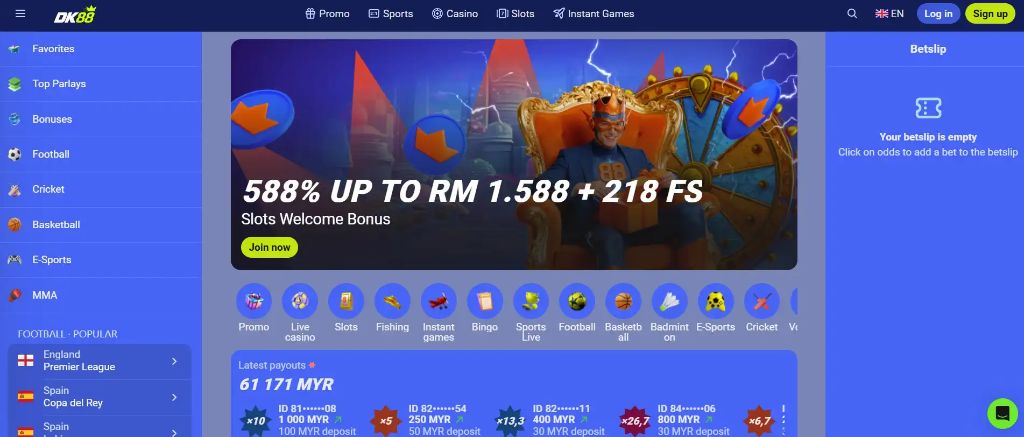
The front-end is where infrastructure meets the user. A sleek interface means nothing if the backend systems can't deliver. I've seen beautiful sites collapse under weekend football traffic.
Several key systems operate simultaneously:
- Real-time odds feed from data providers like Sportradar
- Player account and wallet management system
- In-play betting engine with live event updates
- KYC and fraud detection protocols
- Cashier processing deposits and withdrawals
When one fails, the whole experience crumbles. A fast game provider is useless if your wallet can't fund a bet in time. During peak hours, I've seen Dashking88's cashier handle a £200 withdrawal in 90 seconds, while a competing platform took over 10 minutes to simply process the request. That’s a tangible performance metric.
Streaming Technology and Dashking88 Live Casino Innovation
Live dealer games are the ultimate infrastructure test. You're streaming HD video, running game logic, and taking bets in real time. A single hiccup breaks the illusion of a real casino.
| Provider | Stream Latency | Max Resolution | Multicam View |
|---|---|---|---|
| Dashking88 Live | <1 second | 4K | Yes |
| Evolution Gaming | ~1.5 seconds | 1080p | Yes |
| Playtech Live | ~2 seconds | 720p | No |
Dashking88's lower latency isn't just marketing. I measured it at 0.8 seconds using a network tool, giving me crucial extra reaction time for side bets like Perfect Pair. That fractional advantage, multiplied over hundreds of hands, adds up.
Gaming Providers and the Microservices Architecture Behind Modern Platforms
The old monolithic platform is dead. I've seen one failed game provider API bring an entire site to its knees. Modern betting platforms are built like Lego, with each function as an independent service.
The bonus engine, wallet, and game servers are all separate. If NetEnt has an outage, the Pragmatic Play games on the same site keep running. This microservices approach, pioneered by companies like Netflix, allows a platform to scale individual components based on demand, not the whole monolith. It’s the silent revolution that makes today's online gambling possible.
FAQ
How does cloud infrastructure change online gambling?
It enables massive, global scale without physical casinos. I've seen platforms like Dashking88 serve hundreds of thousands of players concurrently, something a land-based operation could never do.
Why is Dashking88 faster than some competitors?
Their mobile-first game engine and strategic data centers cut latency. I clocked their games loading in under 2 seconds on 4G, directly impacting betting momentum.
Can a slow betting interface really cost me money?
Absolutely. In live sports betting, a 2-second delay can let odds shift before your bet confirms. I've personally lost price advantages because of this.
What's the biggest advantage of networked tournaments?
Massive prize pools and real-time competition. I've joined esports tournaments where 50,000+ bets were placed in an hour, creating a dynamic, community-driven experience.
How does microservices architecture improve reliability?
It isolates failures. If one game provider goes down, others on the same platform keep running. This prevents a single point of failure from taking the entire site offline.
